Are Home Prices Rising or Falling in 2026? What Buyers and Sellers Should Know

Are Home Prices Rising or Falling in 2026? What Buyers and Sellers Should Know
Whether you own a house already or you’re looking to buy one, you probably care about home prices. But it’s not always easy to figure out what’s really happening right now, especially if you look at the headlines.
One says home prices are falling. The next says they’re still climbing.
So, which one’s right? It comes down to where you live.
For buyers and sellers in North County San Diego, understanding how local home prices compare with national housing market trends can help put those headlines into perspective.
Why Are Home Asking Prices Declining This Fall?
Part of the confusion out there may be based on what’s happening to asking prices and how the media is talking about it. They’re calling attention to how asking prices are falling, but don’t give the full context or say that seasonality is at play. So here it is.
Right now, there are more homes on the market than at any other time since November 2019. And with mortgage rates rising since the spring, those homes are taking a little longer to sell. One way to help a home sell quickly in that environment is to have a lower asking price.
According to HousingWire Data, the median asking price is down from $449k in early August to $435k just 2 months later (see graph below):
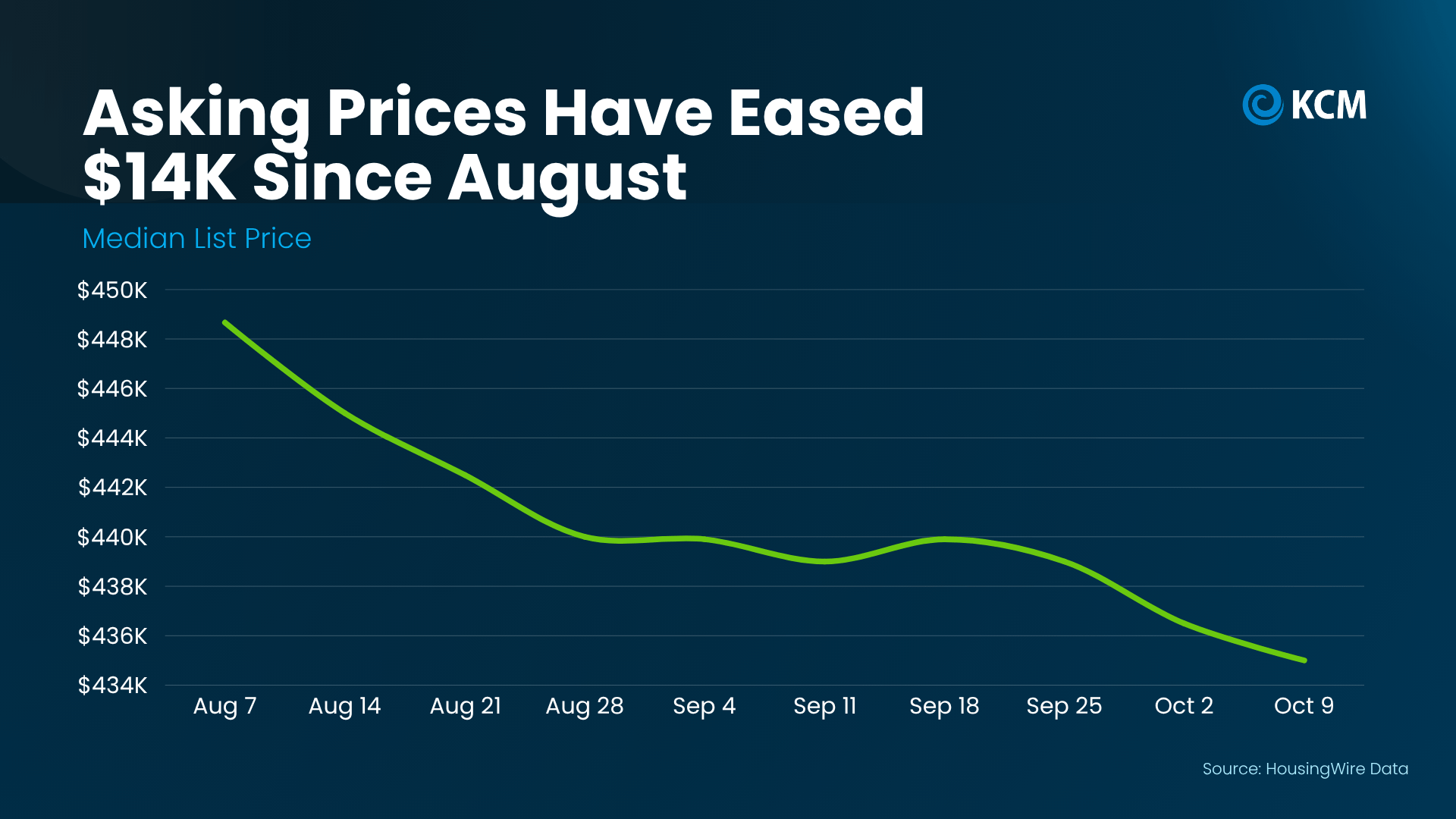
That’s a dip of about 3%, and a lot of it is normal for this time of year.
Asking prices cool off every fall once the busy summer season wraps up. With fewer buyers this time of year, sellers price a bit more competitively. Today’s rates play a role too, since sellers are pricing to match what buyers can afford right now. And that’s a good thing. Smart pricing helps homes sell.
Just keep in mind, that’s a national list price. It doesn’t show what homes near you are actually selling for. So before you react to a headline, ask a local agent what’s really happening in your area.
How Home Price Trends Vary Across U.S. Housing Markets
Realtor.com explains:
“While national headlines might suggest a buyer’s market is taking hold, the reality on the ground depends heavily on where and what you’re trying to buy. Local trends can diverge sharply from national averages, especially when you factor in price range, property type, and post-pandemic market dynamics.”
The latest numbers from the S&P Cotality Case-Shiller Home Price Index show how true that is. According to the report released on September 29, 2026, home prices in Chicago rose almost 7% year over year in July 2026, while prices in Seattle dipped about 1.6%. That’s a gap of nearly 9 percentage points between two major cities (see graph below):
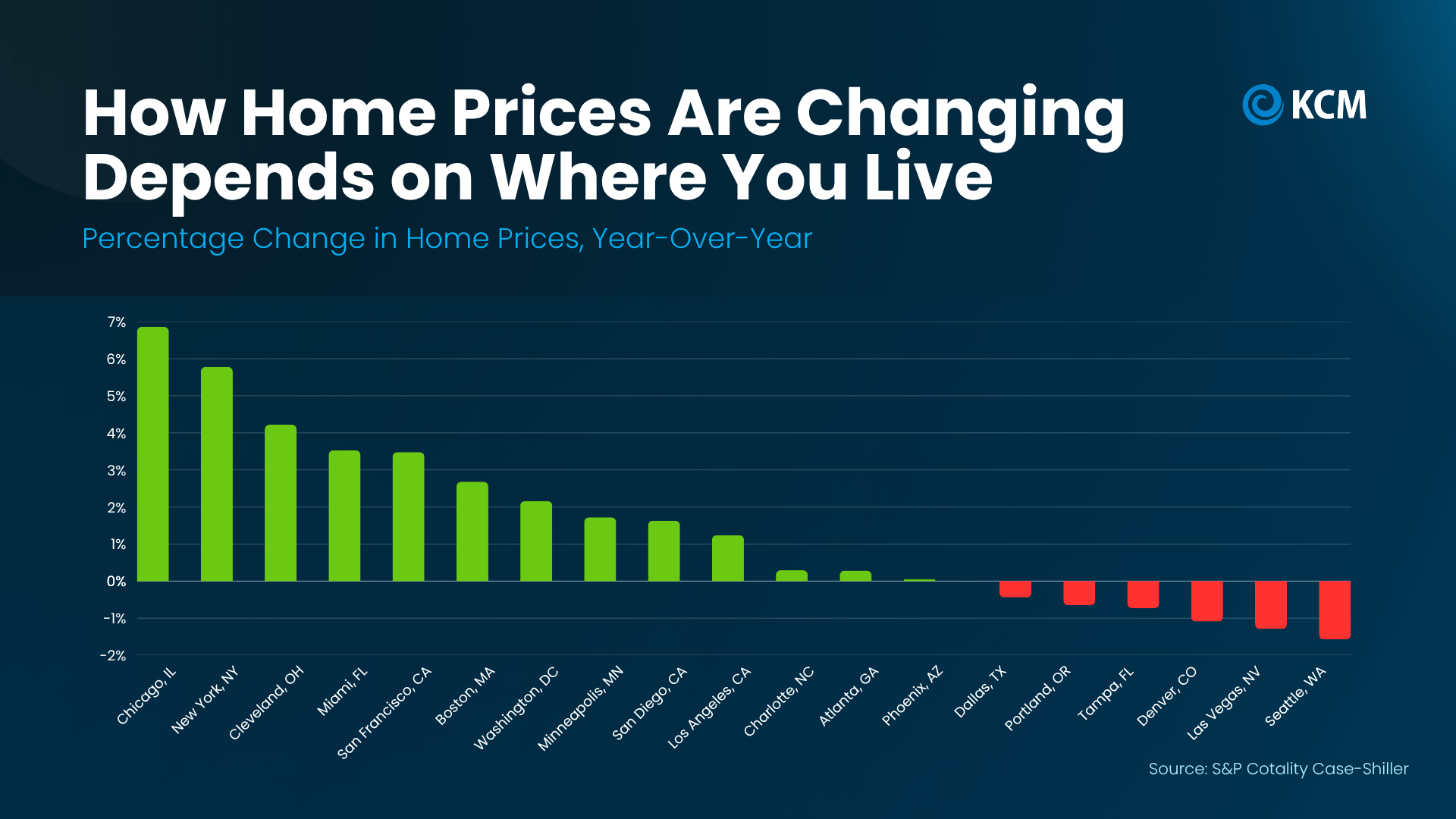
That gap changes your game plan. Selling in New York, where prices are up almost 6%? You may not need to cut your price. Buying in Denver or Las Vegas? You may have more room to negotiate.
Do Falling Home Prices Mean a Housing Market Crash?
Just in case you’re seeing those slight declines in some markets and worried it means a bigger crash is coming, here’s what you need to remember. Among the major metros showing price declines in the Case-Shiller data above, those declines are 2% or less. That’s a long way from a crash like 2008. And if you look back at the graph above, there are more cities in the green than in the red.
And over time, home values have a strong track record. The Federal Housing Finance Agency (FHFA) says national prices have grown year-over-year every quarter since 2012. Go back further, and a $100k home bought in 1991 would be worth about $436k today, even with the 2008 crash factored in (see graph below):
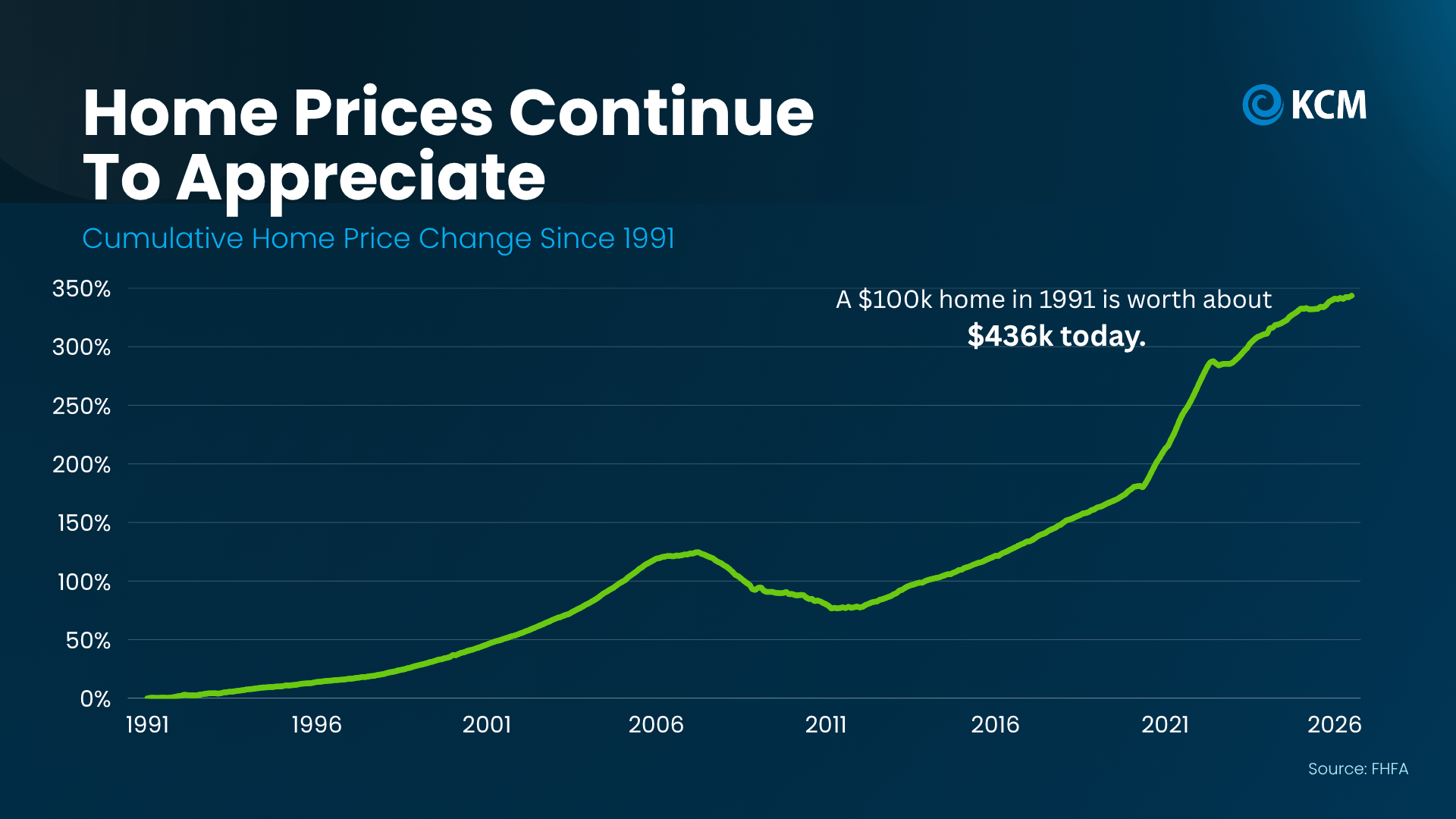
While some markets are experiencing modest price declines, that doesn't necessarily mean those trends will continue long-term. Some of the markets seeing declines experienced significant price growth during the pandemic and may now be adjusting.
Historically, home values have generally appreciated over time, although that doesn't mean prices will rise every year or in every market. What happens next will depend on local supply, buyer demand, affordability, and economic conditions.
Bottom Line: Why Local Home Price Trends Matter in North County San Diego
National headlines can’t tell you what your home is worth or how much room you have to negotiate. Local housing market data can provide a clearer picture.
Whether you're buying or selling a home in North County San Diego, including Oceanside, Carlsbad, Vista, San Marcos, Escondido, or Encinitas, understanding neighborhood home prices, recent comparable sales, and available inventory can help you make informed real estate decisions.
If you're thinking about selling, start by checking your home's estimated value and reviewing the latest North County San Diego market snapshot to better understand local pricing trends.
If you're planning to buy, explore homes for sale in North County San Diego and use the mortgage calculator to estimate potential monthly payments based on different home prices, interest rates, and loan terms.
Ready to take the next step? Contact me to discuss your real estate goals and develop a buying or selling strategy based on current local market conditions.
Frequently Asked Questions About Home Prices in North County San Diego
Are home prices rising or falling in North County San Diego in 2026?
Home price trends vary by city, neighborhood, and property type. According to the S&P Cotality Case-Shiller Home Price Index released on September 29, 2026, home prices in the broader San Diego metro area increased approximately 1.6% year over year in July 2026.
However, that metro-level figure doesn't mean home prices increased equally in Oceanside, Carlsbad, Vista, San Marcos, Escondido, or Encinitas.
To understand what's happening in a specific North County San Diego neighborhood, review recent comparable home sales, active listings, and local inventory trends rather than relying solely on national or regional averages.
How can I determine the right listing price for my home in North County San Diego?
The right listing price depends on your home's location, size, condition, features, recent comparable sales, and current buyer demand.
For homeowners in Oceanside, Carlsbad, Vista, and surrounding North County San Diego communities, a comparative market analysis (CMA) can help estimate a competitive listing price based on similar properties.
Online home value estimates can provide a starting point, but they may not fully account for renovations, property condition, or neighborhood-specific differences.
A local real estate agent can review comparable sales, competing listings, and market conditions to help you develop a pricing strategy.
Is now a good time to buy a home in North County San Diego?
Whether now is a good time to buy depends on your budget, financing options, housing needs, and how long you plan to own the property.
Buyers searching for homes in Oceanside, Carlsbad, San Marcos, Escondido, Vista, or Encinitas should compare asking prices with recent sales, evaluate available inventory, and consider how long properties have been on the market.
Some homes may offer opportunities to negotiate, but that depends on the individual property, seller circumstances, and local competition.
Before making an offer, review the full cost of homeownership, including mortgage payments, property taxes, insurance, and any applicable HOA fees.
About the Agent: Patricia Villanueva | North County San Diego Real Estate Agent
Patricia Villanueva is a North County San Diego real estate agent helping buyers and sellers navigate the local housing market. Serving Oceanside, Carlsbad, Vista, San Marcos, Escondido, Encinitas, and surrounding communities, Patricia Villanueva provides guidance on buying and selling homes, local home prices, and real estate market trends.
Whether you're searching for homes for sale in North County San Diego, looking for a buyer's agent, or preparing to sell with a local listing agent, Patricia Villanueva offers assistance with property searches, home valuations, competitive listing strategies, and real estate negotiations.
Looking for a real estate agent in North County San Diego? Contact Patricia Villanueva to discuss your buying or selling goals.
Disclaimer: This article is for general informational purposes only and does not constitute individualized real estate, financial, mortgage, or legal advice. Housing market data reflects the sources and reporting periods cited. National and regional trends may not reflect local market conditions. Home values and market conditions vary by property and location. Past performance does not guarantee future results. Consult qualified professionals for advice specific to your situation.
Categories
- All Blogs (180)
- 55+ Communities (1)
- Buyer & Seller Resources (37)
- Buyers (10)
- Condo Living (2)
- First-Time Buyers (48)
- Foreclosure Trends (2)
- Foreclosure Updates (2)
- Home Buying Tips (78)
- Home Equity (1)
- Home Improvement (1)
- Home Selling Tips (60)
- Homebuyer Tips (49)
- Homeowner Tips (30)
- Housing Market Insights (32)
- Housing Market Trends (59)
- Market Updates (28)
- Mortgage Education (16)
- Mortgage Insights (13)
- Mortgage Rates (3)
- New Construction (6)
- Pricing Strategy (3)
- Real Estate Advice for Buyers (44)
- Real Estate Advice for Sellers (42)
- Real Estate Insights (23)
- Real Estate Investing (1)
- Real Estate Market Updates (61)
- Renting vs. Owning (4)
- Retirement Planning (2)
- Seller Resources (19)
- Sellers (19)
- VA Home Loans (1)
Recent Posts