Two Moves That Can Help First-Time Homebuyers Buy a Home Sooner

Two Moves That Can Help First-Time Homebuyers Buy a Home Sooner
For a lot of first-time buyers, owning a home can feel perpetually a few years out of reach. Saving for a down payment takes time, and each year you spend renting can make owning feel further off.
But buying your first home doesn’t have to happen to feel like a faraway goal. Two choices you control can bring your first home years closer, even with affordability as tight as it is right now.
How Long Does It Take To Save for a Home and Break Even Compared With Renting?
First, one quick definition. "Breaking even" is the point where owning has cost you about the same as renting would have over the same period. And after that point, owning starts to cost less than renting. Kara Ng, Senior Economist at Zillow, puts it this way:
"Buyers should think about not just when they can afford to buy, but how long they'd need to stay before owning makes more financial sense than renting."
So how long does reaching that point usually take? And what are the shortcuts? Let’s do the math.
According to Zillow’s national analysis, the modeled timeline includes about 8.5 years to save for a 20% down payment, followed by roughly 6.2 years to reach the financial break-even point compared with renting. Together, that’s about 14.7 years. But that calculation relies on specific assumptions, including buying a typical single-family home and putting 20% down.
Changing the price point or down payment amount can reduce the amount you need to save upfront. Your overall timeline will vary based on your financing, housing costs, and local market conditions. It also varies widely by market, since local prices and rents are different depending on where you live.
How a Starter Home Could Help You Buy Your First Home Sooner
In Zillow’s analysis, a starter home refers to a home in the lowest third of home values in a region. They’re often condos, townhomes, or single-family homes a little smaller or older than others in the area.
Choosing a lower-priced starter home may reduce the amount of time needed to save for a down payment. And while that might sound obvious, you may not realize just how much of a difference a lower price point could make. Because if you’re buying a more affordable home, you don’t have to save up as much or as long.
In Zillow’s national analysis, the modeled combined timeline for a starter home was about 7.2 years — roughly half the 14.7-year estimate for a typical single-family home (see graph below):
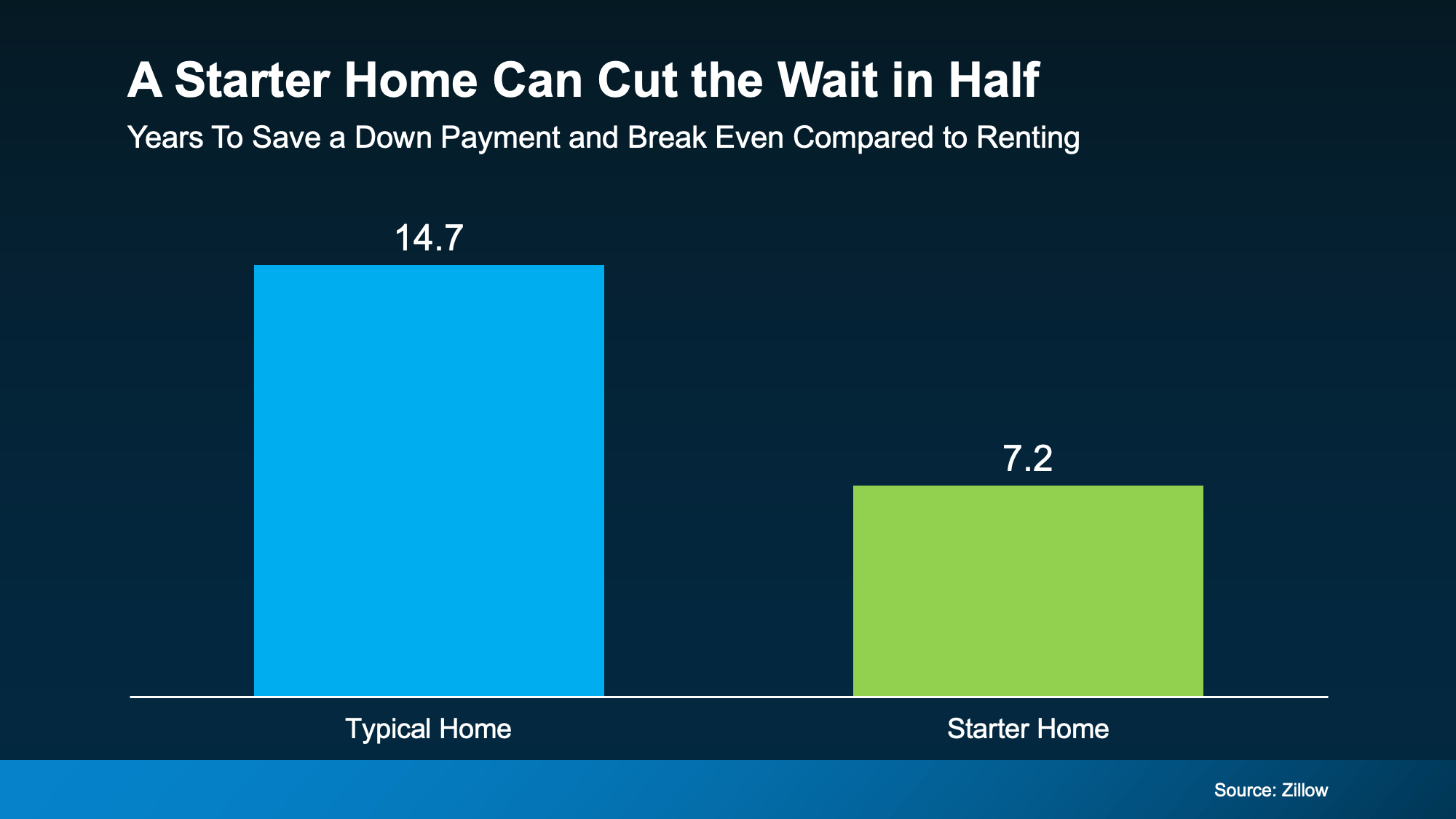
That works out to about 4.6 years to save and 2.6 years to break even. It won't erase every affordability challenge, but Zillow's analysis shows how a lower-priced starter home could significantly shorten the modeled timeline. And if you’ve already been saving for a while, it could get you closer to making it a reality.
How Much Do First-Time Homebuyers Need for a Down Payment?
You, like many first-time homebuyers, might assume you need a 20% down payment to even consider buying. But a lot of the time, you don’t.
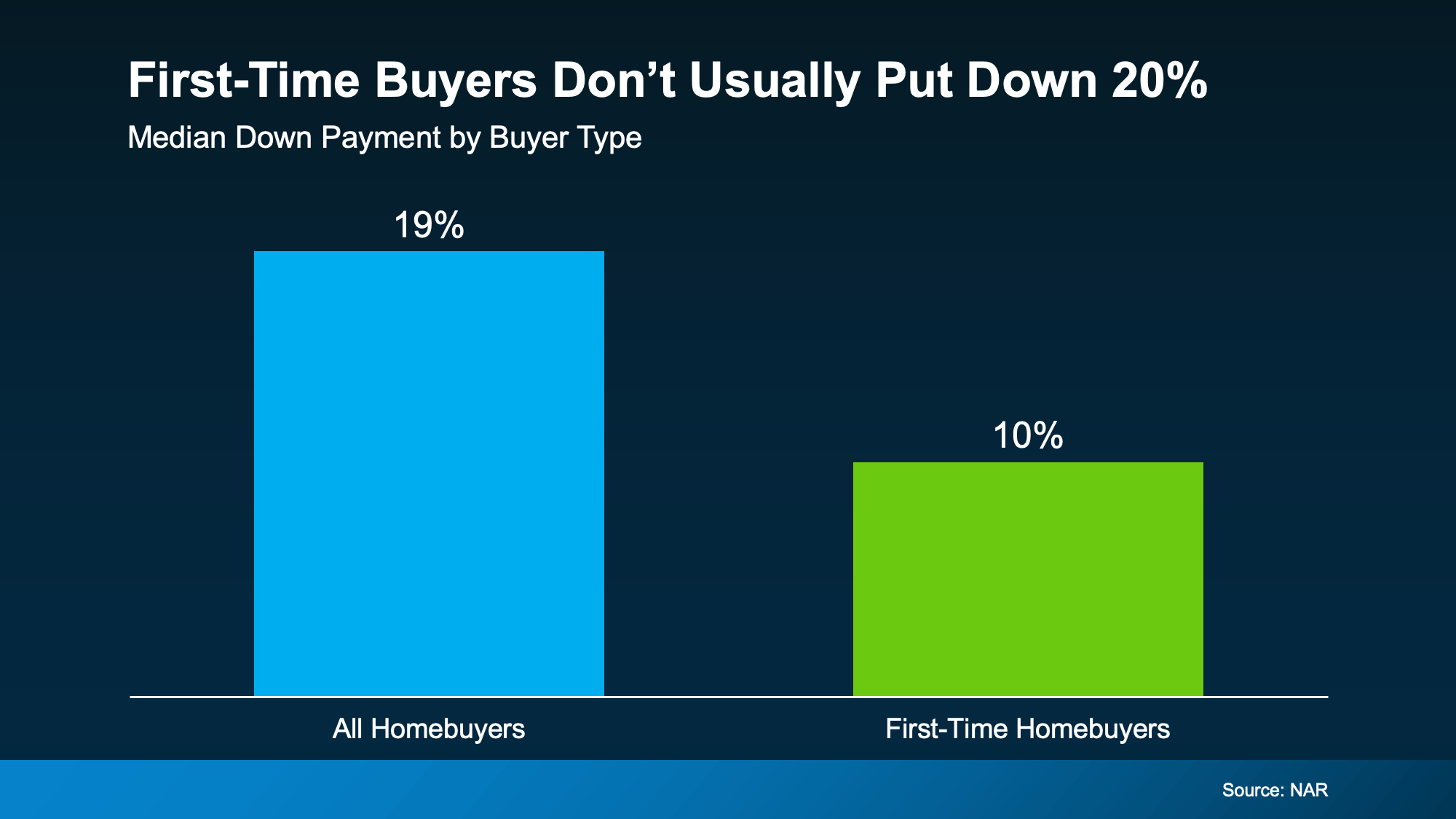
Most first-time buyers don't put down anywhere near that. According to NAR’s 2025 Profile of Home Buyers and Sellers, the median down payment for first-time buyers was 10% (see graph below):
And the minimums go lower still. Some buyers put down as little as 3% on a conventional loan or 3.5% on an FHA loan, and eligible veterans or buyers in certain rural areas can put down nothing at all.
There's help with the upfront costs of buying, too. Down Payment Resource counts 2,746 assistance programs nationwide, and some are even stackable:
"Some homebuyers can layer multiple sources of assistance to reduce their upfront costs. Layering means combining more than one eligible source of funding as part of your home purchase."
Put those together – a lower price point, a smaller down payment, and eligible assistance – and the amount of time needed to save for the upfront costs of buying may come down.
Bottom Line: Your First Home May Be Closer Than You Think
Your first home may not be as far off as it feels. When the numbers make sense for you, considering a starter home and exploring lower down payment options may help make homeownership possible sooner.
If you’re thinking about buying your first home in North County San Diego, start by exploring homes for sale and checking the latest North County San Diego real estate market trends. You can also use the mortgage calculator to estimate potential monthly payments based on different home prices and loan scenarios.
Already own a home and considering a move? Get an estimated home value to help you understand where your property may stand in today’s market.
Want help finding starter homes that may fit your budget and homebuying goals? Contact me to talk about buying a home in North County San Diego.
Frequently Asked Questions About Buying Your First Home
How Much Do First-Time Homebuyers Typically Put Down?
First-time homebuyers don’t necessarily need a 20% down payment. According to the National Association of REALTORS®, the median down payment for first-time buyers was 10% in its 2025 Profile of Home Buyers and Sellers. Some mortgage programs allow smaller down payments. For example, certain conventional loan programs can allow as little as 3% down, while FHA loans can allow down payments as low as 3.5%. Requirements vary, so buyers should speak with a qualified lender about available financing options and eligibility.
Can Buying a Starter Home Help First-Time Buyers Become Homeowners Sooner?
It may. According to Zillow’s 2026 national analysis, the modeled combined time to save a 20% down payment and reach the financial break-even point compared with renting was about 7.2 years for a starter home, compared with 14.7 years for a typical single-family home. The starter-home estimate includes approximately 4.6 years to save and 2.6 years after purchasing to reach the modeled break-even point. These are national estimates based on specific assumptions, and actual timelines vary by location and individual circumstances.
Are There Down Payment Assistance Programs for First-Time Homebuyers?
Yes. Down payment assistance programs are available in many areas, although availability, eligibility, funding, and program requirements vary. HUD notes that state and local governments offer programs that can help with down payments. First-time homebuyers in North County San Diego should speak with a qualified lender or appropriate housing-program provider to determine which current programs they may qualify for.
About Patricia Villanueva – North County San Diego Real Estate Agent
Patricia Villanueva is a North County San Diego real estate agent helping first-time homebuyers, experienced buyers, and homeowners navigate buying and selling a home. From searching for homes for sale in North County San Diego and understanding local market conditions to pricing and marketing a home for sale, Patricia Villanueva provides personalized guidance throughout the real estate process. If you’re looking to buy or sell a home in North County San Diego, contact Patricia Villanueva to get started.
Disclaimer: This content is for informational purposes only and is not financial, legal, tax, or lending advice. Real estate and financing conditions vary by market and individual circumstances. Buyers should consult qualified professionals regarding their specific situation and loan or program eligibility.
Categories
- All Blogs (174)
- Buyer & Seller Resources (33)
- Buyers (9)
- Condo Living (1)
- First-Time Buyers (47)
- Foreclosure Trends (2)
- Foreclosure Updates (2)
- Home Buying Tips (74)
- Home Equity (1)
- Home Improvement (1)
- Home Selling Tips (56)
- Homebuyer Tips (47)
- Homeowner Tips (27)
- Housing Market Insights (32)
- Housing Market Trends (59)
- Market Updates (28)
- Mortgage Education (16)
- Mortgage Insights (13)
- Mortgage Rates (3)
- New Construction (6)
- Pricing Strategy (3)
- Real Estate Advice for Buyers (41)
- Real Estate Advice for Sellers (39)
- Real Estate Insights (23)
- Real Estate Investing (1)
- Real Estate Market Updates (57)
- Renting vs. Owning (4)
- Retirement Planning (1)
- Seller Resources (18)
- Sellers (18)
- VA Home Loans (1)
Recent Posts